
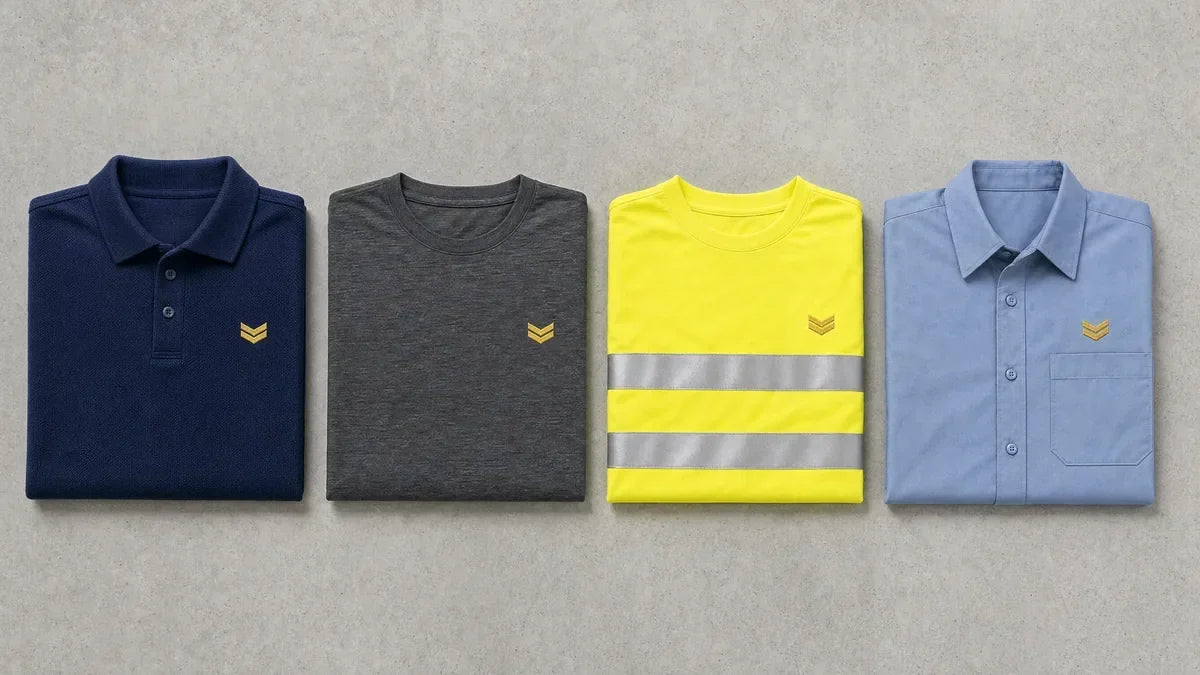
Which work apparel survives your trade. Garment and decoration picks for restaurants, construction, HVAC, warehouse, landscaping, medical, and auto shops.
Work Apparel • Industry Guide
Serving DeLand, Florida; Volusia County; Seminole County; Orange City; Deltona; DeBary; Daytona Beach; Sanford; Lake Mary; and surrounding Central Florida communities
The wrong shirt fails in weeks. The right one survives a full season of grease, chemicals, sun, and heavy laundering. Choosing custom work apparel by industry means matching the garment and the decoration method to what actually destroys shirts in that environment, not just picking a color and a logo.
This is a practical, trade by trade breakdown for owners and operations managers buying branded workwear for staff. In every section, the organizing question is the same: what wears these shirts out, and what construction resists it.
Key Takeaways
- Fabric blend, garment color, and stitch quality matter more than brand name for workwear durability.
- Embroidery resists abrasion better than print because there is no film to wear off.
- Charcoal and heather grey outlast true black where bleach and sanitizer are present.
- Decoration on hi-vis gear cannot reduce required reflective or background material area.
- Screen printing wins on high volume runs, while DTF handles full color logos on smaller batches.
Restaurants and Food Service
Grease and repeated hot washing are the enemy here. A 60/40 poly cotton blend releases oil during laundering far better than 100 percent ring spun cotton, which tends to hold stains. The single biggest killer of black kitchen shirts is bleach exposure from sanitizer buckets, so charcoal and heather grey outlast true black by a wide margin. Aprons take embroidery cleanly because the panel is not stretched during wear, giving you a stable surface for a logo.
Avoid a heavy plastisol print across the chest of a cook shirt. It traps heat over a hot line and eventually cracks at the fold line where the fabric bends all day. For smaller front of house runs and full color logos, DTF transfers are a lighter, more flexible option. Employee clothing and hygiene provisions are covered by the FDA Food Code, the model rules most states adopt for retail food establishments, so confirm your local requirements before finalizing a uniform program.

Construction, Roadwork, and Utilities
On road and utility crews, visibility is the durability question. ANSI 107 class 2 and class 3 requirements depend on traffic speed and worker proximity, and it is the background material area plus the retroreflective tape area that sets the class, not color alone. That has a direct effect on decoration: a logo cannot cover required reflective area or cut the background material below the class minimum. This is why logos on hi-vis garments sit on the left chest and on a small area of the back yoke.

Decoration note: Heat applied vinyl on hi-vis polyester can scorch. Lower the platen temperature and lengthen the dwell time to protect the fabric.
High visibility garment requirements for flaggers are spelled out in OSHA's construction signaling standard. For crews that need compliant options, we help you plan placement so your branding never compromises coverage on hi-vis and ANSI rated gear.
HVAC, Plumbing, and Field Service
Attic runs and crawlspace work mean constant abrasion and snagging. The construction details that survive are double needle stitching at the shoulder and sleeve hems, a tighter knit such as pique, and reinforced pocket bartacks where tools and belts pull hardest. Loose single stitched hems unravel quickly once a thread catches on ductwork or framing.
Embroidery outlasts print in this environment because there is no film layer to abrade off against tight spaces. Field service teams usually need a name and trade badge, which comes down to one logo file plus a variable name field. That setup lets you add technicians over time without redrawing artwork for every shirt.
"In trades where shirts drag against ductwork and framing all day, embroidery survives because there is nothing on the surface to wear away."

Warehouse and Logistics
Warehouse programs are defined by high volume, high turnover, and a cost per unit that matters more than premium hand feel. Screen printing wins on runs above roughly 72 pieces, delivering a consistent, durable print at scale. Just as important, the size range has to run to 4XL and 5XL, and many fashion fit blanks simply do not offer those sizes.
Get work apparel matched to your trade
Tell us the trade, the crew size, and the conditions the garments will live in, and we will spec the right blanks and the right decoration method. Send print ready vector artwork if you have it and we will confirm exactly what we need before anything goes on press.
Get a work apparel quote →Because shirts get worn hard and replaced on a cycle, pick a blank that will still be stocked next year. Chasing a discontinued garment mid program means color and fit differences across your crew. Consistency and availability beat novelty for a large, rotating workforce.
For warehouse teams, the smartest blank is not the softest one. It is the one that comes in 5XL and will still be in the catalog when you reorder.
Landscaping and Outdoor Crews
UV fade and sweat salt are the two forces working against landscaping apparel across Central Florida. Polyester performance tees hold color under sun better than cotton, but they show oil and equipment stains permanently, so weigh that trade off. Long sleeve sun shirts are increasingly requested by crews who spend full days in direct light.
For sun protection, the CDC's skin cancer prevention guidance recommends long sleeves, wide brims, and tightly woven fabric. On decoration, sublimation is not an option on light cotton, so DTF or screen printing with a soft hand additive gives you durable color without a stiff, heat trapping print on hot days.
- Polyester holds color longer under UV but locks in oil stains.
- Long sleeve sun shirts add coverage for full day outdoor work.
- Soft hand screen print keeps prints breathable in Florida heat.
Medical, Dental, and Professional Offices
In offices and clinics, appearance matters more than abrasion resistance. The workhorse garments are embroidered polos and quarter zips with tight stitch density on small text and a color palette that survives frequent laundering. Low stitch density on small lettering fills in over time and reads as a blur after about ten washes, so density is the detail that protects your brand.
Because these garments are laundered often and seen up close, clean, print-ready artwork is essential. Send a vector or high-resolution logo file so small names, credentials, and taglines stay crisp wash after wash.
Automotive and Industrial Shops
Oil, solvents, and open flame near welding change the rules for automotive and industrial apparel. Cotton is required near welding because polyester melts to the skin, which is a genuine safety consideration and not a matter of preference. That single fact should drive fabric selection for anyone working around sparks or torches.
Mechanic shirts also tend to need a snap or button front rather than a knit collar, both for a professional look and for durability against constant reaching and bending. Darker colors and grease releasing blends help the garment stay presentable between wash cycles in a busy shop.
Screen Printing vs DTF vs Embroidery for Workwear
Instead of comparing these methods on looks, compare them on the criteria that actually matter for a working crew: abrasion, wash cycles per week, chemical exposure, and how many colors your logo contains.
| Criteria | Screen Printing | DTF Transfers | Embroidery |
|---|---|---|---|
| Abrasion resistance | Good | Moderate | Excellent |
| Heavy wash cycles | Strong on volume runs | Good with proper application | Strongest overall |
| Chemical exposure | Holds up on durable blends | Moderate | Very good, no surface film |
| Multi color logos | Best on high volume | Best for full color, small runs | Limited by stitch detail |
✅ Pros
- Screen printing is efficient and durable on large runs.
- DTF reproduces full color logos on smaller batches.
- Embroidery resists abrasion and heavy laundering best.
❌ Cons
- Screen printing is less efficient for small quantities.
- DTF is a surface layer that can abrade in rough trades.
- Embroidery struggles with tiny text and many colors.
What to Send Us for an Accurate Work Apparel Quote
The more we know about how the garment will be used, the better we can match fabric and decoration to your crew. When you reach out, include these details so we can recommend the right build the first time.
- Your trade and the typical working conditions the shirts face.
- Crew size and how many garments per person you need.
- Full size range, including big and tall sizes such as 4XL and 5XL.
- Wash frequency, so we can steer fabric and color choices.
- Whether the garment is worn under a jacket or on its own.
- Whether hi-vis compliance applies to any part of the crew.
- Vector or high-resolution artwork ready for production.
Qwik Tees Printing & Embroidery works with contractors, restaurants, landscapers, HVAC companies, auto shops, and offices throughout DeLand, Volusia County, Seminole County, and the surrounding Central Florida area. When you are ready to outfit your crew with apparel built for the job, get a work apparel quote and we will help you match garment and decoration to the conditions your team actually works in.
Frequently Asked Questions
What decoration method lasts longest on work shirts?
For most trades, embroidery outlasts print because there is no film or ink layer to abrade off during heavy use. Screen printing holds up well on high volume runs, while DTF handles full color logos on smaller batches. The right choice depends on abrasion, wash frequency, chemical exposure, and how many colors your logo contains.
Why do black work shirts fade faster than grey ones?
Bleach and sanitizer exposure is the top killer of true black garments, especially in food service. Charcoal and heather grey hide chemical spotting and color loss far better, which is why they tend to outlast black on crews that handle cleaning agents daily.
Can you print or embroider on ANSI hi-vis safety shirts?
Yes, but decoration cannot cover the required reflective area or reduce the background material below the class minimum. That is why logos on hi-vis garments are placed on the left chest and a small area of the back yoke. Requirements vary by traffic speed and worker proximity.
Where can I get custom work apparel near DeLand, Florida?
Qwik Tees Printing & Embroidery in DeLand serves crews and businesses throughout Volusia County, Seminole County, and surrounding Central Florida communities, including Orange City, Deltona, DeBary, Daytona Beach, Sanford, and Lake Mary. We help you match garment and decoration to your trade's real working conditions.
What artwork do I need to provide for a work apparel order?
Send finished, print-ready artwork in vector format or a high-resolution logo file. Clean artwork keeps small text and badges crisp through repeated washing. Along with your file, include your trade, crew size, and full size range for the most accurate quote.
Get work apparel matched to your trade
Tell us the trade, the crew size, and the conditions the garments will live in, and we will spec the right blanks and the right decoration method. Send print ready vector artwork if you have it and we will confirm exactly what we need before anything goes on press.
Get a work apparel quoteNo commitment required · Free consultation


