
Learn how to wash screen printed shirts, DTF transfers, and embroidery the right way. Real care tips to stop cracking, peeling, and fading. From Qwik Tees.
Apparel Care • Print Longevity
Serving DeLand, Florida; Volusia County; Seminole County; Orange City; Deltona; DeBary; Daytona Beach; Sanford; Lake Mary; and surrounding Central Florida communities. and surrounding areas
Knowing how to wash screen printed shirts is the difference between a design that lasts for years and one that cracks after a month. The good news: most print failures are caused by heat and laundry habits, not by the printing itself. This guide breaks down exactly how to care for screen print, DTF, and embroidery so your custom apparel keeps looking new.
Key Takeaways
- Heat destroys screen print and DTF, not water: wash cold and skip the hot dryer.
- Turn every printed shirt inside out and never iron directly on the design.
- Wait 24 to 48 hours before the first wash of a new DTF shirt.
- Skip fabric softener on prints; it weakens adhesion over time.
- Never machine wash or dry a structured embroidered hat.
Why the Right Decoration Method Changes Everything
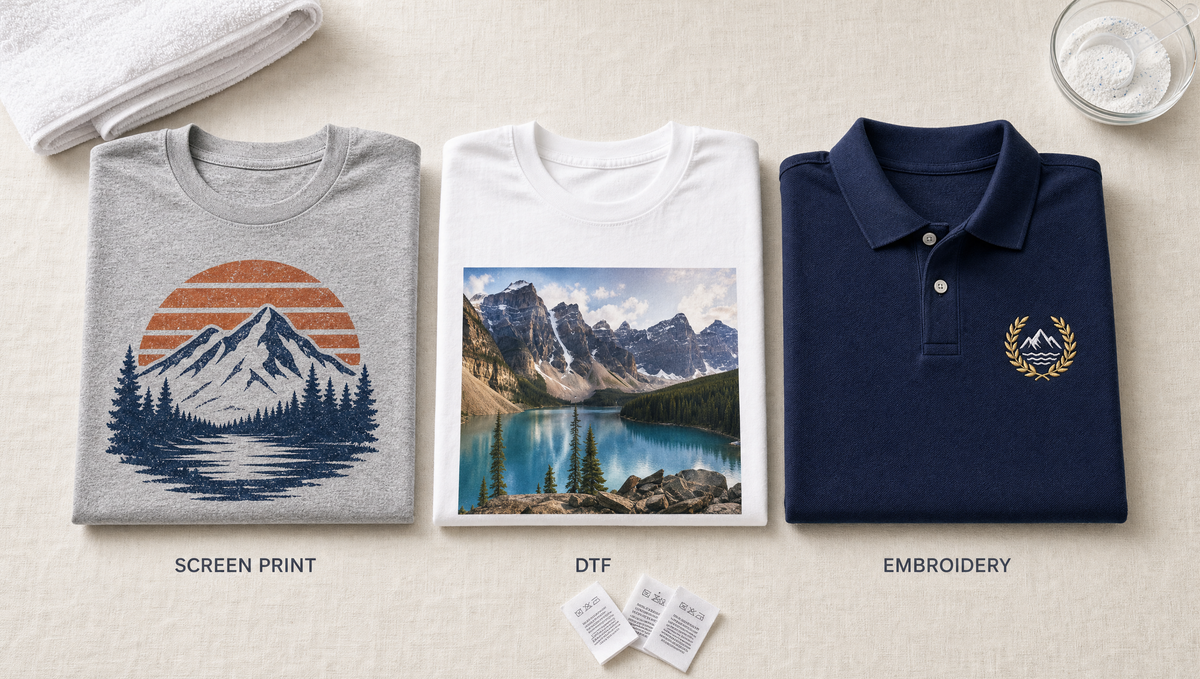
Screen print, DTF, and embroidery each fail in completely different ways, so blanket laundry advice does not work. A plastisol screen print sits on top of the fabric as a flexible plastic layer, a DTF transfer is a pigment layer bonded down with adhesive powder, and embroidery is thread stitched all the way through the garment. Understanding what each decoration actually is tells you exactly what to protect it from. If you are still deciding on a method for an upcoming order, it helps to compare DTF and screen printing before you buy, because durability and care requirements differ.
One rule applies across all three: read the tag. Manufacturers are required to provide accurate care instructions under the FTC's Care Labeling Rule, and the garment tag reflects what the fabric itself can handle before you even factor in the print.
How to Wash Screen Printed Shirts
Plastisol ink is a flexible plastic film that cures at roughly 320 degrees. That single fact explains almost every screen print failure: the print does not fear water, it fears heat. A hot dryer and a direct iron are the two things that will crack and peel a screen print, because both reach temperatures that soften and stress the cured ink. If you understand how plastisol screen printing works, the care rules make immediate sense.

- Turn the shirt inside out before it goes in the machine.
- Wash in cold water on a gentle cycle.
- Skip fabric softener entirely.
- Hang dry, or tumble dry on low if you must use the dryer.
- Never iron directly on the print; press from the reverse side or use a cloth barrier.
Ironing tip: If a printed shirt needs pressing, flip it inside out and iron the back of the design, or lay a thin cotton cloth over the print. Direct iron contact is the fastest way to ruin a screen print.
Caring for DTF Transfers
DTF is a pigment layer held to the fabric by a hot-melt adhesive powder, which makes it the most heat sensitive of the three methods. The adhesive needs 24 to 48 hours after pressing to fully set, so the very first wash should wait. Washing too soon, or exposing the print to high heat, causes the classic DTF failures: edges that lift and a cloudy, hazy look across the design. You can see why timing matters when you understand our DTF transfer process and how the adhesive bonds.
The care routine mirrors screen print, only stricter. Wash cold, turn the garment inside out, and hang dry. A direct iron will re-melt the adhesive and destroy the print instantly, so never iron on a DTF design under any circumstances. If the fabric needs pressing, work only on the blank areas from the reverse side.
DTF is the least forgiving of heat. One pass with a hot iron directly on the print can undo the entire transfer in seconds.
How Embroidery Behaves Differently in the Wash
Because embroidery is thread stitched through the fabric rather than a layer sitting on top, it cannot crack or peel the way a print does. It is genuinely sturdier in the wash than either screen print or DTF. Embroidery fails in its own ways instead: puckering around the design, snagged threads, and backing showing through thin fabric. It can also be pressed from the reverse on low heat, and unlike the two prints, fabric softener is perfectly fine on embroidery. Our custom embroidery services are popular on polos and workwear precisely because stitched logos hold up so well over time.
Structured hats are the one big exception. The buckram stiffener in the crown collapses and the bill warps permanently if a structured cap goes through a washing machine or a dryer. Hand wash the panels with a soft brush and mild soap, then air dry the cap over a rolled towel or a cap form to hold its shape
"Embroidery outlasts both prints in the laundry, but a single trip through the dryer will destroy the shape of a structured hat for good."
Why Did My Shirt Crack? Troubleshooting Common Failures
If a print has already failed, the symptom usually points straight to the cause. Use this table to diagnose what went wrong and adjust your routine going forward.
| Symptom | Likely Cause | Fix Going Forward |
|---|---|---|
| Screen print cracking or peeling | Hot dryer or direct ironing | Wash cold, tumble low or hang dry, press from the reverse |
| DTF edges lifting | First wash too soon or high heat | Wait 24 to 48 hours, wash cold, hang dry |
| DTF looks cloudy or hazy | Heat exposure or direct iron | Never iron the print; avoid hot dryer cycles |
| Print edges slowly weakening | Fabric softener buildup | Stop using softener on printed garments |
| Embroidery puckering or backing showing | Aggressive wash or wrong fabric weight | Gentle cycle; choose heavier fabric for dense designs |
| Warped or misshapen hat | Machine washed or dried | Hand wash panels, air dry on a cap form |
The takeaway across almost every row is the same: heat and softener are the two silent print killers. Water and normal detergent are rarely the problem.
Why Fabric Softener Hurts Prints
Fabric softener feels harmless, but it works against printed garments in a specific mechanical way. It deposits a thin, waxy coating across the fabric and the print. Over repeated washes, that coating works its way under the edges of the print and gradually weakens the bond between the decoration and the shirt. On a screen print or DTF transfer, that means faster peeling and lifting. On embroidery there is nothing to lift, so softener is completely fine there.
Work Uniforms, Commercial Laundering, and Hi-Vis Gear
Branded work shirts on a weekly rotation live a harder life than a shirt you wear occasionally. Commercial and industrial laundering, with its high heat and harsh chemicals, shortens print life considerably compared to gentle home washing. For businesses in Volusia County and Seminole County running uniform programs, this is worth planning around: contractors, HVAC crews, landscapers, and restaurant staff across Orange City, Deltona, and Sanford often need durable decoration that survives frequent, aggressive cleaning.
Hi-vis safety apparel is a separate case entirely. The reflective tape on a hi-vis garment degrades with washing and loses retroreflectivity over time, which means a shirt can still look wearable while no longer meeting safety standards. Employers relying on high-visibility gear should track its condition against OSHA's personal protective equipment standards and retire pieces once the reflective material fades, regardless of how the fabric looks.
Outdoor crews across Central Florida also lean on hats for daily sun protection, and a decorated cap earns its keep for years if it is cared for properly. The reasoning behind brimmed hats and covered skin is well documented in the EPA's sun safety guidance, which is one more reason to hand wash a structured cap rather than destroy its shape in the machine.
Your Quick Custom Apparel Care Checklist
- Turn every printed shirt inside out before washing.
- Always wash in cold water on a gentle cycle.
- Wait 24 to 48 hours before the first wash of a new DTF shirt.
- Hang dry when possible; tumble low only if needed.
- Never iron directly on a screen print or DTF design.
- Skip fabric softener on prints; it is fine on embroidery.
- Hand wash structured hats and air dry them on a cap form.
- Retire hi-vis gear once the reflective tape stops performing.
Great care starts with great decoration. If you need custom shirts, workwear, uniforms, or embroidered hats built to last, Qwik Tees Printing & Embroidery in DeLand, Florida helps customers throughout Volusia County, Seminole County, and the surrounding Central Florida communities choose the right method for their fabric, quantity, and intended use. Send over your print-ready artwork and request a quote to get started.
Frequently Asked Questions
How should I wash screen printed shirts to prevent cracking?
Turn the shirt inside out, wash in cold water on a gentle cycle, and skip the fabric softener. Hang dry or tumble on low, and never iron directly on the print. Heat, not water, is what cracks plastisol ink.
How long should I wait before washing a new DTF shirt?
Wait at least 24 to 48 hours after the transfer is pressed before the first wash. The hot-melt adhesive that bonds a DTF print needs that time to fully cure, and washing too early can cause the edges to lift.
Can I put an embroidered hat in the washing machine?
No. Structured hats have a buckram stiffener in the crown and a shaped bill that machine washing and dryers permanently ruin. Hand wash the panels with a soft brush and air dry over a rolled towel or a cap form instead.
Does fabric softener damage screen printed or DTF shirts?
Yes. Fabric softener leaves a waxy coating that works under the edges of the print and weakens the adhesion over repeated washes. It is safe on embroidery but should be avoided on both screen print and DTF.
Where can I get durable custom shirts near DeLand, Florida?
Qwik Tees Printing & Embroidery in DeLand serves Volusia County, Seminole County, and surrounding Central Florida communities with screen printing, DTF transfers, and embroidery. Request a quote and we will help you match the right decoration method to your fabric and intended use.


