
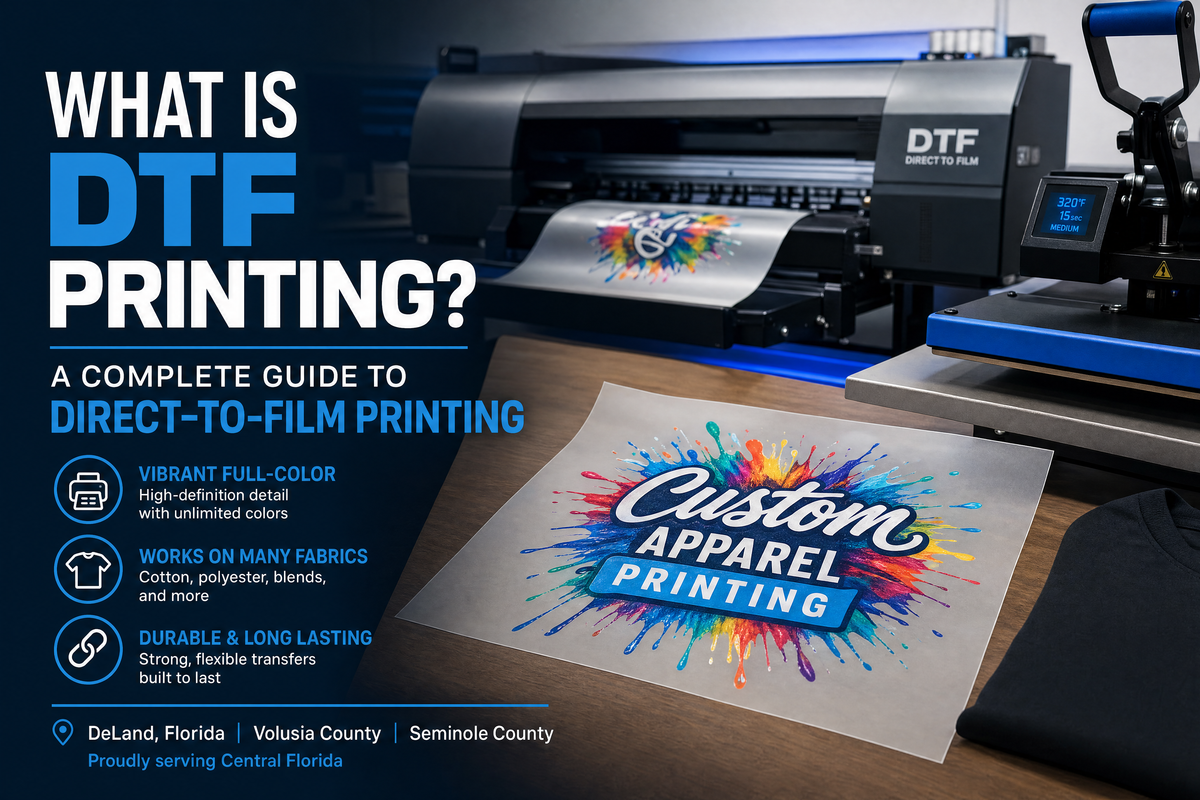
What is DTF printing? Learn how Direct-to-Film printing works, when it makes sense, and how it compares to screen printing and embroidery for custom shirts.
Custom Apparel Education • Print Methods
Serving DeLand, Florida; Volusia County; Seminole County; Orange City; Deltona; DeBary; Daytona Beach; Sanford; Lake Mary; and surrounding Central Florida communities.
If you have been researching custom shirts for your business, school, church, or organization, you have probably come across the term DTF printing and wondered what it actually means. Understanding what is DTF printing and how it works can help you make a smarter decision before placing your next custom apparel order. This complete guide breaks down the Direct-to-Film printing process, explains when DTF makes sense, compares it to other decoration methods, and helps you understand whether it is the right choice for your project.
What Does DTF Printing Mean?
DTF stands for Direct-to-Film printing, a relatively newer garment decoration method that has gained significant popularity in the custom apparel industry over the past several years. Unlike traditional screen printing, which applies ink directly through mesh screens onto the garment, DTF printing involves printing your design onto a special transfer film first. That printed film is then transferred onto your shirt, hoodie, or other apparel item using heat and pressure.
The name describes the process simply: the design goes directly to the film before being applied to the fabric. This approach gives DTF printing unique advantages, particularly when it comes to full-color designs, detailed artwork, and smaller order quantities. For customers in DeLand and throughout Volusia County who need vibrant, multi-color custom shirts without ordering hundreds of pieces, DTF has become an increasingly attractive option.
How Does DTF Printing Work?
Understanding the DTF printing process helps explain why this method produces the results it does. While the technology behind it is sophisticated, the basic workflow is straightforward enough for any customer to understand.
- Your artwork is prepared digitally, typically by the print shop's graphics team who optimize the file for printing
- The design is printed onto a specialized PET transfer film using water-based pigment inks
- A fine adhesive powder is applied to the wet ink on the film
- The transfer is cured, melting the adhesive powder and bonding it to the printed design
- The finished transfer is heat-pressed onto the garment using controlled temperature and pressure
Once the heat press cycle completes and the transfer cools, the film is peeled away, leaving your full-color design permanently bonded to the fabric. The result is a smooth, flexible print that becomes part of the garment rather than sitting heavily on top of it. For a small business in Sanford ordering logo shirts or a church in Orange City preparing for a community outreach event, this process delivers professional results without requiring large minimum orders.
Quality Tip: The final durability and appearance of your DTF print depends heavily on proper application. Working with an experienced local print shop ensures correct temperature, pressure, and timing for your specific garment type.
When Does DTF Printing Make Sense?
DTF printing is not the right choice for every custom apparel project, but it excels in specific situations that many of our Central Florida customers encounter regularly. Understanding when DTF makes sense helps you get better results and spend your budget wisely.
DTF printing is often a strong fit for full-color logos with multiple colors, gradients, or photographic elements. If your company logo includes shading, detailed graphics, or more than three colors, DTF can reproduce that complexity without the added setup costs that screen printing would require. A landscaping company in Deltona with a detailed tree graphic, an auto detailer in DeBary with a photographic logo, or a restaurant in Lake Mary with a colorful illustrated design can all benefit from DTF's ability to handle complex artwork.
- Full-color logos and detailed artwork with gradients or shading
- Small-to-medium order quantities where screen printing setup costs are not practical
- Event shirts, fundraiser apparel, and one-time projects
- Church shirts for outreach programs, mission trips, or special services
- School spirit wear and student organization shirts
- Work shirts and branded apparel for local businesses
- Custom hoodies and sweatshirts with vibrant graphics
- Orders requiring different designs across the same batch
For customers who need flexibility, DTF printing allows different sizes to be printed without additional setup. A youth sports team in Volusia County ordering shirts from youth small through adult XXL can get the same quality across every size without worrying about screen printing registration challenges on smaller garments.
DTF printing eliminates the high setup costs associated with multi-color screen printing, making it cost-effective for orders as small as 12-24 pieces with full-color designs
DTF Printing vs. Screen Printing
One of the most common questions we hear from customers in DeLand and throughout Seminole County is whether DTF printing or screen printing is the better choice. The honest answer is that neither method is universally superior. Each has strengths that make it the smarter choice in different situations.
Screen printing has been the industry standard for decades, and for good reason. When you are ordering a large quantity of shirts with a simple one-to-three color design, screen printing often delivers the lowest cost per shirt and exceptional durability. The inks sit directly on the fabric fibers, creating a bond that can last for years of heavy wear and washing. For a Daytona Beach construction company ordering 200 work shirts with a simple two-color logo, screen printing is typically the most economical and durable choice.
| Factor | DTF Printing | Screen Printing |
|---|---|---|
| Best for quantities | 12-100 pieces | 48+ pieces |
| Color capability | Unlimited colors, gradients, photos | Best for 1-3 solid colors |
| Setup costs | Minimal | Higher (per-screen charges) |
| Cost per shirt (large orders) | Higher | Lower |
| Print feel | Smooth, flexible film | Ink directly in fabric |
| Fabric flexibility | Cotton, polyester, blends | Best on 100% cotton |
DTF printing shines when your design includes many colors, when your order quantity is smaller, or when you need to print on polyester or blended fabrics. A Sanford fitness studio ordering 36 performance shirts with a full-color gradient logo would likely get better results and value from DTF printing than from screen printing, which would require multiple screens and potentially face challenges with polyester fabric.
"The best print method depends on your specific project. A great local print shop will recommend the right approach based on your artwork, quantity, garment choice, and budget, not just push whatever method is most convenient for them."
DTF Printing vs. Embroidery
DTF printing and embroidery serve different purposes in custom apparel, and understanding the distinction helps you choose appropriately for your project. While DTF printing applies a printed design to the fabric surface, embroidery involves stitching your logo or design directly into the garment using thread.
For embroidery services, the ideal applications include polos, button-down shirts, jackets, hats, and professional company uniforms where a premium, textured look matters. An HVAC company in Lake Mary outfitting their technicians in embroidered polos projects a more professional image than printed shirts might. A Volusia County accounting firm providing embroidered button-downs for client-facing staff creates a polished, executive appearance.
Need Help Choosing the Right Printing Method?
Qwik Tees can help you decide whether DTF printing, screen printing, or embroidery is the best fit for your custom apparel order in DeLand, Volusia County, Seminole County, and surrounding Central Florida areas.
Get a Free Quote →✅ DTF Printing Strengths
- Unlimited colors and photographic detail
- Lower cost for complex, multi-color designs
- Smooth finish ideal for t-shirts and casual wear
- Works well on lightweight fabrics
✅ Embroidery Strengths
- Premium, textured, professional appearance
- Extremely durable, especially on workwear
- Better for polos, hats, jackets, and button-downs
- Perceived higher value for corporate apparel
DTF printing is generally the better choice when your design includes many colors, gradients, or detailed graphics that would be impossible or prohibitively expensive to embroider. A DeLand nonprofit with a colorful illustrated logo would struggle to reproduce that design in embroidery, but DTF could capture every detail. However, that same nonprofit might choose embroidered polos for their board members while using DTF-printed t-shirts for volunteer events.
What Types of Apparel Work Well with DTF?
One of DTF printing's significant advantages is its versatility across different fabric types. Unlike some decoration methods that work best on specific materials, DTF can produce quality results on cotton, polyester, and blended fabrics when applied correctly by an experienced print shop.
For custom t-shirt printing, DTF works beautifully on the 100% cotton tees that many customers prefer for comfort and breathability. It also performs well on the 50/50 cotton-poly blends popular for their balance of comfort and durability. Performance polyester shirts, increasingly requested by sports teams, fitness businesses, and companies with outdoor workers, accept DTF transfers effectively, which is a significant advantage over traditional screen printing that can struggle with synthetic fabrics.
- 100% cotton t-shirts for everyday wear and casual events
- Cotton-poly blend shirts balancing comfort and durability
- Performance polyester for sports teams and athletic wear
- Hoodies and sweatshirts for schools, teams, and businesses
- Work shirts including cotton and poly-cotton options
- Lightweight promotional shirts for events and giveaways
A youth basketball team in Seminole County can get matching performance jerseys with full-color DTF printing, while their parents get comfortable cotton t-shirts with the same design. Both garments come out looking professional and consistent, which is harder to achieve with some other decoration methods.

Is DTF Printing Durable?
Durability is one of the top concerns customers have when considering DTF printing for their custom apparel. The good news is that properly applied DTF prints can last through many wash cycles and regular wear when cared for correctly. The key phrase is "properly applied," which is why working with an experienced local print shop matters significantly.
The durability of a DTF print depends on several factors: the quality of the transfer film and inks used, the correct application temperature and pressure, adequate curing time, and proper garment care after purchase. When all these factors align, DTF prints bond securely to the fabric and resist cracking, peeling, and fading through normal use. A contractor in DeBary wearing DTF-printed work shirts several days per week can expect those shirts to hold up through regular laundering.
Care Instructions: Extend the life of your DTF printed garments by washing inside out in cold water, using mild detergent, avoiding bleach, and tumble drying on low heat or hanging to dry.
Following proper care instructions makes a meaningful difference in how long your prints last. Customers who wash their DTF garments inside out, use cold water, avoid harsh detergents, and skip high dryer heat consistently report better longevity than those who treat printed shirts the same as plain garments. When you order from Qwik Tees, we include care recommendations so your investment lasts.
Common Mistakes to Avoid When Ordering DTF Shirts
Even the best printing technology cannot overcome certain common mistakes that customers sometimes make when ordering custom apparel. Knowing what to avoid helps ensure your DTF project turns out exactly as you envision.
Sending low-resolution artwork is perhaps the most frequent issue. Your final print can only be as sharp as the original file allows. A logo pulled from a website or a small image from social media often lacks the resolution needed for quality printing. Vector files or high-resolution graphics produce dramatically better results, and a good print shop can advise you on whether your artwork needs adjustment before production.
- Using low-resolution artwork that produces blurry or pixelated prints
- Choosing the wrong garment for the application or decoration method
- Ignoring how shirt color affects design visibility and appearance
- Skipping proper wash care and damaging prints prematurely
- Assuming all print methods produce identical results
- Ordering from distant online providers without seeing samples or getting guidance
Another common mistake is choosing the wrong garment for your needs. A customer ordering shirts for a charity 5K in Daytona Beach might instinctively choose the cheapest cotton tee available, when a lightweight performance blend would be more appropriate for runners. Similarly, selecting a dark shirt when your logo has dark elements can create visibility problems that a print shop could have caught before production.
Why Work With a Local Print Shop for DTF Printing
The custom apparel industry has no shortage of online print providers offering DTF services, but there are compelling reasons to work with a local shop like Qwik Tees rather than uploading your order to a faceless website. The difference often shows in the final product and the overall experience.

When you work with a local print shop in DeLand, you get personalized guidance that online providers simply cannot match. We can look at your artwork and honestly tell you whether DTF is the right choice or whether screen printing or embroidery would better serve your needs. We can show you garment samples so you can feel the fabric weight and quality before committing. We can discuss placement options, recommend sizing based on your group's needs, and catch potential problems before they become expensive mistakes.
For businesses throughout Volusia County and Seminole County, working locally also means faster turnaround when you need it, easier communication when questions arise, and the ability to pick up your order rather than waiting on shipping. A restaurant in Lake Mary preparing for a grand opening or a church in Orange City organizing a weekend event can get their custom apparel faster and with more confidence when working with a nearby shop that understands their timeline.
Local print shops build their reputation on quality and service within their community. We see our customers at local events, in restaurants, and around town, which means we are invested in getting your order right.
Final Recommendation: Is DTF Printing Right for Your Project?
After exploring what is DTF printing, how it works, and how it compares to other methods, the question becomes whether it is the right choice for your specific project. The answer depends on your artwork, your order quantity, your garment preferences, your budget, and how the apparel will be used.
DTF printing is often an excellent choice when your design includes full-color artwork, gradients, or detailed graphics. It works well for small-to-medium orders where screen printing setup costs would be prohibitive. It offers flexibility across cotton, polyester, and blended fabrics, making it versatile for different applications. For event shirts, church apparel, school spirit wear, sports team uniforms, and business shirts with colorful logos, DTF frequently delivers the best balance of quality, flexibility, and value.
However, DTF is not always the answer. Large bulk orders with simple one-to-three color designs often make more sense for screen printing. Professional polos, hats, jackets, and executive apparel typically look better with embroidery. The smartest approach is discussing your project with an experienced custom apparel provider who can recommend the right method based on your specific needs, not just default to whatever is easiest for them.
At Qwik Tees in DeLand, Florida, we work with customers throughout Volusia County, Seminole County, Orange City, Deltona, DeBary, Daytona Beach, Sanford, Lake Mary, and surrounding Central Florida communities to find the right decoration method for every project. Whether DTF printing, screen printing, or embroidery makes the most sense for your order, we provide honest guidance, quality garments, professional production, and the personalized service that only a local shop can offer. Contact us for a free quote on your next custom apparel project, and let us help you choose the best approach for your design, budget, and timeline.
Quick Reference: DTF Printing Checklist
- DTF printing stands for Direct-to-Film, where designs are printed on transfer film then heat-pressed onto garments
- Best suited for full-color designs, detailed artwork, gradients, and small-to-medium order quantities
- Works well on cotton, polyester, and blended fabrics including t-shirts, hoodies, and work shirts
- Screen printing may be better for large bulk orders with simple one-to-three color designs
- Embroidery may be better for polos, hats, jackets, and professional company uniforms
- Proper care extends print life: wash inside out, cold water, mild detergent, low heat drying
- High-resolution artwork produces significantly better results than low-quality images
- Working with a local print shop provides guidance, samples, and personalized service online providers cannot match
Frequently Asked Questions
Is DTF printing good for custom shirts?
Yes, DTF printing is excellent for custom shirts, especially when your design includes full-color artwork, gradients, or detailed graphics. It works well for small-to-medium orders and offers flexibility across different fabric types including cotton, polyester, and blends.
Is DTF better than screen printing?
Neither method is universally better. DTF printing is often the smarter choice for full-color designs and smaller orders with low minimums. Screen printing typically works better for large bulk orders with simple one-to-three color designs where cost-per-shirt matters most.
What fabrics work best with DTF printing?
DTF printing works well on cotton, polyester, and cotton-poly blended fabrics when applied correctly. This versatility makes it popular for t-shirts, hoodies, work shirts, and performance apparel across many industries.
How long do DTF prints last?
DTF prints can last through many wash cycles when applied correctly and cared for properly. Following care instructions is important: wash garments inside out, use cold water, avoid harsh detergents, and skip high heat in the dryer.
Can Qwik Tees print DTF shirts for businesses, schools, and churches?
Absolutely. Qwik Tees provides DTF printing services for local businesses, schools, churches, sports teams, and organizations throughout DeLand, Volusia County, Seminole County, and surrounding Central Florida communities. Contact us for a free quote on your project.
Need Help Choosing the Right Printing Method?
Qwik Tees can help you decide whether DTF printing, screen printing, or embroidery is the best fit for your custom apparel order in DeLand, Volusia County, Seminole County, and surrounding Central Florida areas.
Get a Free QuoteNo commitment required · Free consultation


