
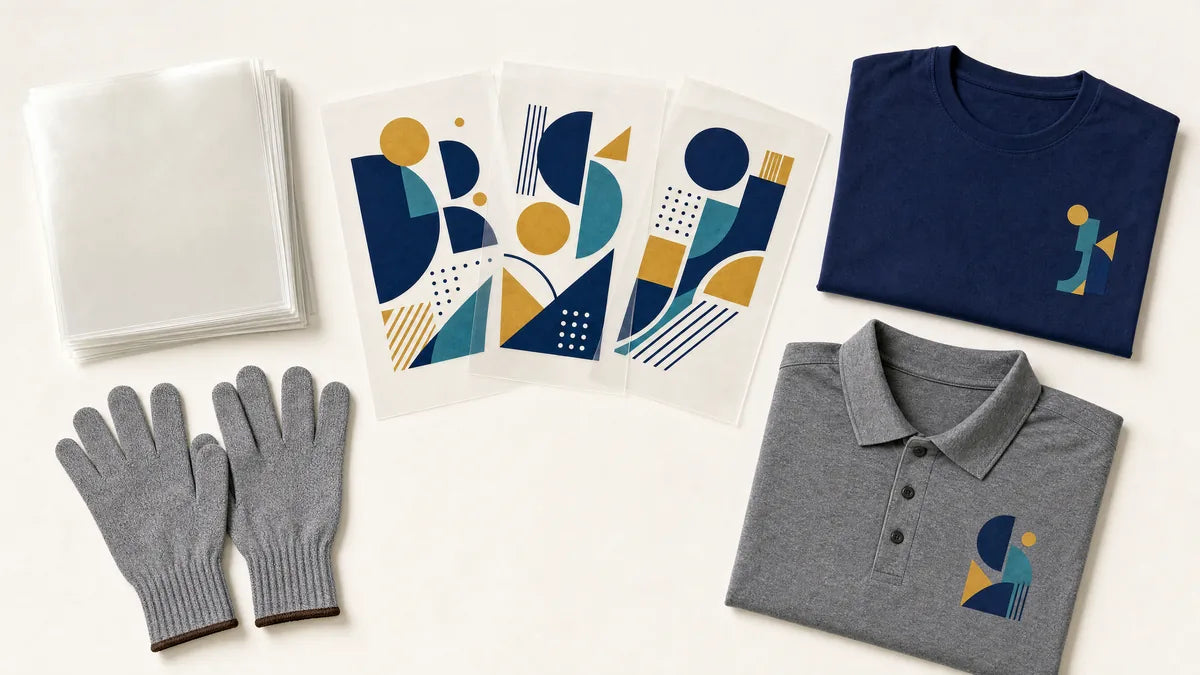
DTF is not right for every job. Here is how run size, color count, fabric, and print placement decide between DTF transfers, screen printing, and embroidery.
Custom Apparel • Print Method Selection
Serving DeLand, Florida; Volusia County; Seminole County; Orange City; Deltona; DeBary; Daytona Beach; Sanford; Lake Mary; and surrounding Central Florida communities
You have a real order in front of you, and the only question that matters is simple: for this job, is a DTF transfer the right call or the wrong one? Knowing when to use DTF transfers comes down to five order variables, not to the technology itself. This guide walks each one so you can decide the same day.
Key Takeaways
- Five variables decide the method: run size, color count, fabric and color, print location, and deadline.
- DTF is the right call for small runs, full-color art, mixed garments, and fast reorders.
- Screen printing usually wins on high volume, simple one or two color designs.
- Embroidery beats both on caps, polos, fleece, and jackets judged by their finish.
- DTF bonds to cotton, polyester, and blends, but bright polyester needs dye-migration control.
The Five Variables That Decide the Method
Before you commit to any decoration method, look at your order through five lenses. Each one nudges the job toward or away from a transfer, and together they usually point to a clear answer. This is a decision framework, not a definition, so skim the list and self-select before you read the detail below.
- Run size: how many pieces are you ordering in total?
- Color count: is the artwork one flat color or a full-color photo?
- Fabric and color: cotton, polyester, or a blend, and light or bright?
- Print location and size: flat chest and back, or a curved cap and seam?
- Deadline: comfortable timeline or a last-minute reorder?
Quick self-check: If your answers lean toward small quantity, many colors, mixed garments, and a tight deadline, you are almost certainly looking at DTF.
Where DTF Is the Right Call
DTF earns its place on jobs that would fight against burning screens. It shines on runs under roughly fifty pieces, on artwork with photographic detail, gradients, or many colors, and on mixed orders where every piece is a different garment color or style. Because there is no per-color setup, youth and adult sizes can ride in the same run without adding cost, and a small reorder does not force screens to be burned all over again. It is also the practical way to produce a one-off sample or mockup before a larger order goes to print.

For a landscaping crew in Deltona that wants a detailed full-color logo on a dozen shirts, or a church group in Sanford printing a handful of event tees, DTF transfer printing is usually the cleanest answer. The detail comes through, the small quantity stays efficient, and every shirt can be a different color if the order calls for it.
DTF is the right call when your art is complex, your quantity is modest, or your order mixes garment colors and sizes that would each need their own screen setup.
Where Screen Printing Wins Instead
The math flips as quantity climbs and color count drops. Screen printing carries a real setup cost per color, but once the screens are burned, the cost per piece falls with volume. That makes it the stronger choice for high-volume runs, one and two color artwork, very large areas of solid coverage, and jobs on premium retail tees where the softest possible hand feel is the whole point. A single-color logo on 200 shirts is a classic case where screen printing for larger runs pulls ahead.
Screen printing also involves inks and solvents that are managed under workplace safety rules, including OSHA's Hazard Communication standard, which is one reason it lives in a dedicated production process rather than a quick press cycle. If you are weighing the two approaches on a specific order, it helps to understand how the two methods compare side by side before you decide.
✅ DTF favors
- Small and mid-size runs
- Full-color and photographic art
- Mixed garments and sizes
- Fast reorders and samples
❌ Screen printing favors
- High-volume runs
- One and two color designs
- Large solid coverage
- Softest hand feel on retail tees
When Neither One Is the Answer
Sometimes the right call is not a printed graphic at all. Polos, fleece, jackets, and caps are judged by their finish, and a customer expects a clean, professional look that a flat transfer cannot always deliver. A transfer sitting on heavy fleece or a waffle knit cannot follow the texture underneath it, so it can look pasted on rather than built into the garment.
For those pieces, custom embroidery on polos and outerwear is the method that matches the expectation. An HVAC company in Lake Mary outfitting a crew in structured caps and branded jackets will almost always want stitching rather than a transfer, because the finish is exactly what the customer is paying to project.
Get the right print method matched to your order
Tell us the quantity, the garment and color, where the art needs to land, and the date you need it in hand. Send print ready artwork at full size and we will tell you whether DTF, screen printing, or embroidery is the better fit for the job.
Send Your Details →"A transfer follows the garment only where the garment is flat. On a curved cap or a heavy knit, the finish is where transfers lose and embroidery wins."
Fabric Reality: What DTF Sticks To
One of the biggest practical advantages of DTF is that it adheres to cotton, polyester, blends, and most performance fabrics, where traditional plastisol on polyester can be trickier. That flexibility matters in Central Florida, where many teams and outdoor crews choose lightweight performance polyester because it breathes in the heat and humidity. When a job involves long hours outside, garment choice is a real safety decision, not just a comfort one, as the National Weather Service's heat safety resource makes clear.

There is one thing to manage on bright 100% polyester, especially red and royal: dye migration, where the garment dye bleeds into the print. A lower temperature press cycle and a polyester friendly film are what keep it under control. Fabrics that make poor candidates for DTF include coated nylon shells, water-repellent finishes, and heavily textured knits, because the film cannot form a reliable bond. For crews that need full coverage against sun exposure, the EPA's UV Index scale is a useful reminder that fabric weight and coverage matter as much as the print on it.
Placement Reality: Where a Transfer Fights Back
DTF handles a left chest, full front, full back, sleeve, and youth sizing with no new setup between any of them, which is part of why it suits mixed orders so well. The trouble starts on curved and seamed areas, where a flat transfer has to conform to a shape it was never made for. A structured cap front, a pocket edge, a collar, and a zipper seam all give a transfer something to fight, and that is where you see lifting or an uneven finish.
If your design lives on flat panels, placement is a non-issue for DTF. If it needs to wrap a seam or sit on a rigid cap front, that is a signal to look at another method for that specific piece.
Cost Logic Without the Guesswork
You do not need a price list to understand the shape of the decision. DTF carries almost no setup, so its cost per piece stays close to flat as quantity climbs. Screen printing carries real setup per color, so its cost per piece falls as quantity climbs. Picture two lines on a chart: the DTF line runs nearly level, and the screen printing line starts higher but drops as the order grows.
Every job has a crossover quantity where those two lines meet, and that crossover moves with color count. A simple one-color design reaches the crossover at a lower quantity, while a full-color design pushes it much higher, often past the point where DTF simply makes more sense. Knowing which side of that crossover your order falls on is most of the decision.
Deadline Reality and What Goes Wrong
DTF skips color separations and screen burning, which is exactly why rush jobs and last-minute reorders lean on it. When a coach in Orange City needs a few more jerseys before the weekend, a transfer can move without rebuilding a full screen setup. That speed is a genuine strength, but it only holds when the process is done correctly.

When DTF is the wrong call, or when it is pressed carelessly, the failures are predictable. Edges lift from an under-pressed or over-pressed cycle, a large solid block can feel like a stiff plastic patch on a lightweight tee, a print that was never fully cured cracks after repeated hot washes, and a glossy finish can read cheap next to a soft-hand screen print. None of these are mysteries, and each one traces back to matching the method and the pressing to the garment.
Reorder tip: If you expect to reorder small batches over time, a transfer-based approach spares you from re-burning screens for every top-up run.
How to Describe Your Job So a Printer Can Choose for You
You do not have to make the final call yourself. If you describe the order clearly, an experienced printer can match the method to it quickly. Give us the quantity, the garment and its color, the art file type and resolution, the print locations, and the date you need the order in hand. Note that finished, print-ready artwork, meaning a vector or high-resolution logo file, is what keeps the job moving, so have those files ready when you reach out.
Serving businesses, schools, teams, and churches across Volusia County, Seminole County, and the wider Central Florida area, Qwik Tees Printing & Embroidery helps you weigh all five variables before anything goes to production. When you are ready, send us the details of your job and we will recommend the method that fits your design, fabric, quantity, and timeline.
Your Quick Decision Checklist
- Under about fifty pieces or full-color art? Lean DTF.
- High volume with one or two colors? Lean screen printing.
- Caps, polos, fleece, or jackets judged by finish? Lean embroidery.
- Bright 100% polyester? Plan for dye-migration control with a polyester friendly film.
- Curved cap fronts, seams, or zippers? Keep transfers off those areas.
- Rush reorder with no time for new screens? DTF is built for it.
Frequently Asked Questions
How many shirts is too few for screen printing?
There is no fixed cutoff, but smaller runs, often under about fifty pieces, tend to favor DTF because there are no screens to burn. As quantity climbs, screen printing usually becomes the more efficient choice, especially on one and two color designs.
Will a DTF transfer crack or peel over time?
A properly pressed and fully cured transfer holds up well through normal washing. Cracking and lifting almost always trace back to an under pressed or over pressed cycle, so the pressing process matters more than the method itself.
Can DTF transfers go on polyester and performance fabrics?
Yes, and that is one of their biggest practical advantages. The main thing to manage is dye migration on bright 100% polyester, especially reds and royals, which a lower temperature cycle and a polyester friendly film help control.
Where can I get help choosing between DTF, screen printing, and embroidery near DeLand?
Qwik Tees Printing & Embroidery in DeLand helps customers throughout Volusia County, Seminole County, and surrounding Central Florida communities match the right method to their design, fabric, quantity, and deadline. Share your order details and we will recommend the best fit.
Is DTF a good choice for hats and structured caps?
Usually not. A transfer struggles to follow the curve and seams of a structured cap front, so embroidery is typically the better call for caps, polos, and outerwear.
Get the right print method matched to your order
Tell us the quantity, the garment and color, where the art needs to land, and the date you need it in hand. Send print ready artwork at full size and we will tell you whether DTF, screen printing, or embroidery is the better fit for the job.
Send Your DetailsNo commitment required · Free consultation


